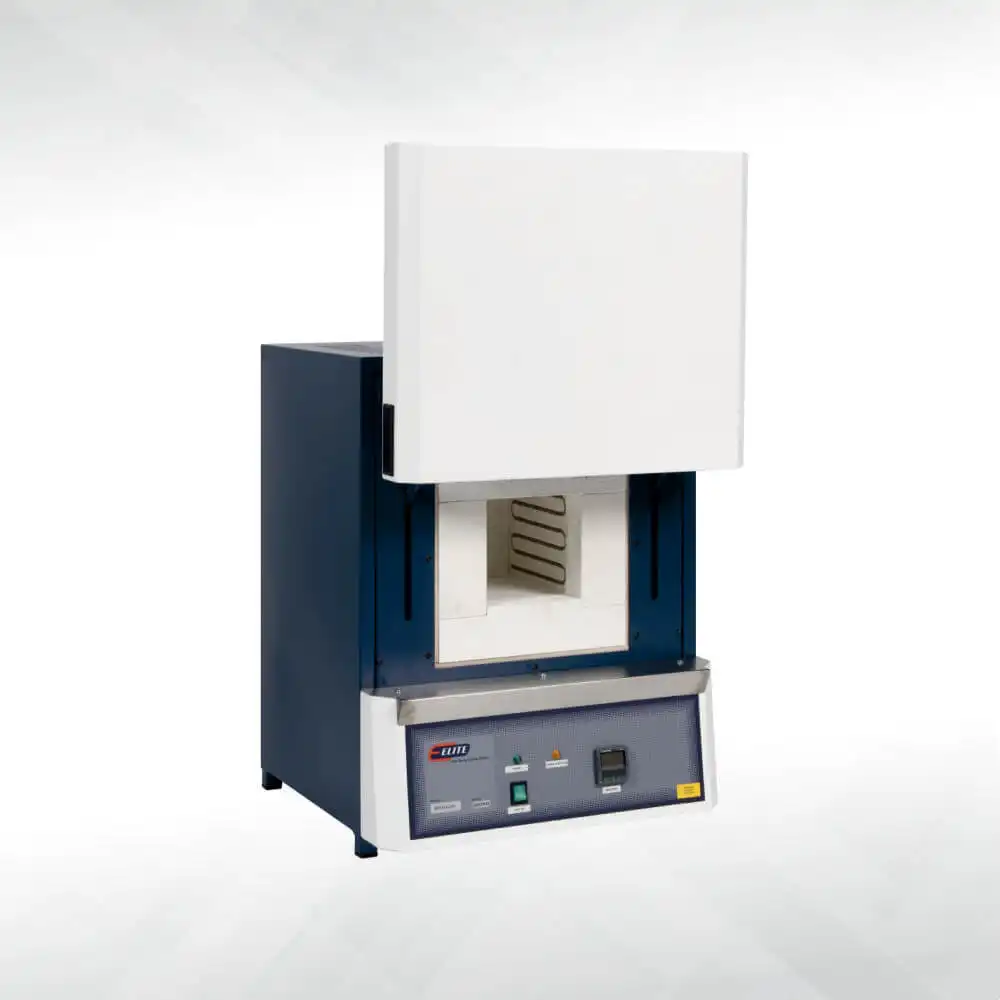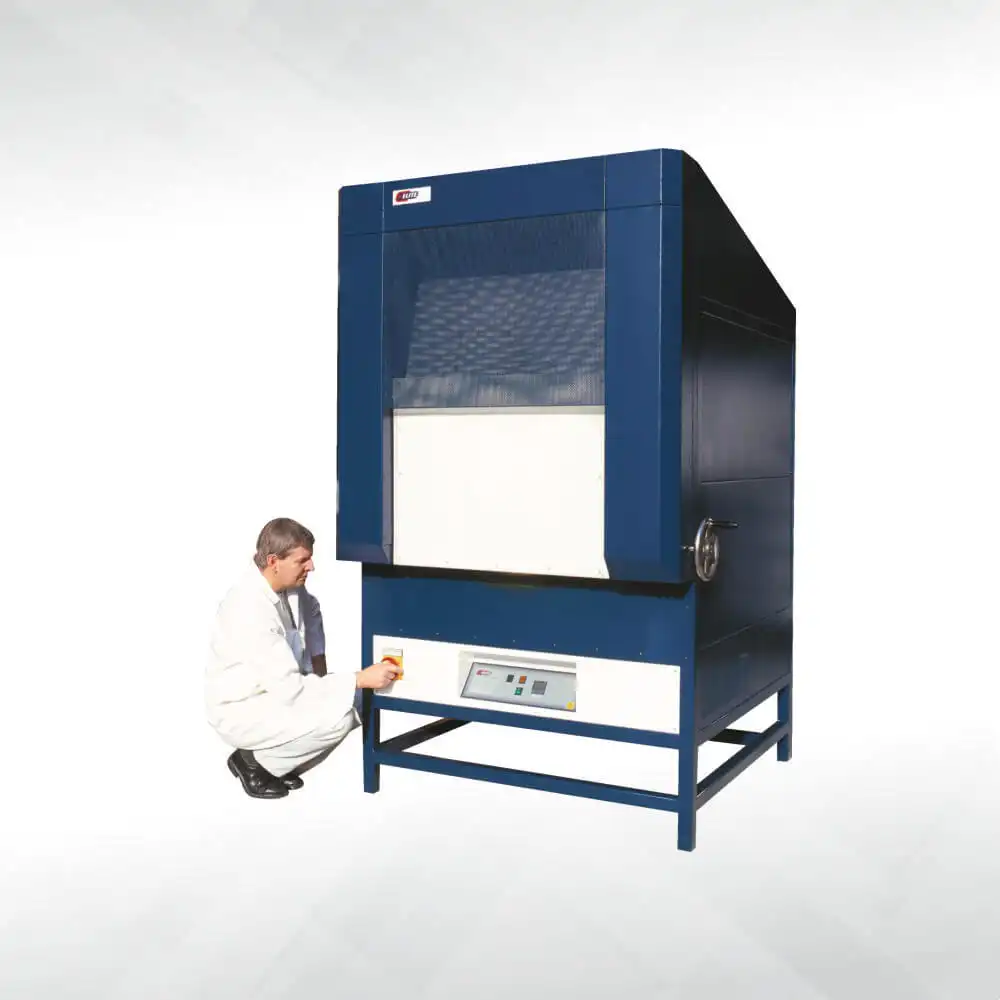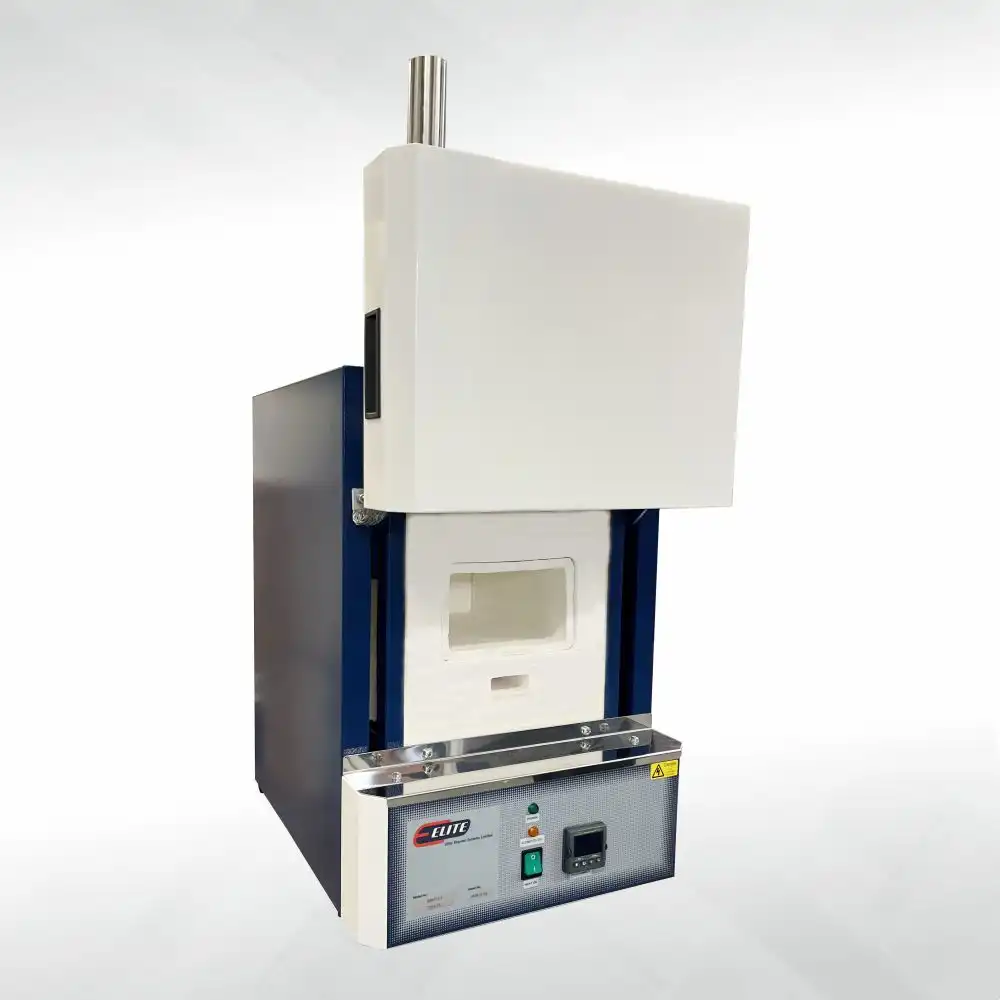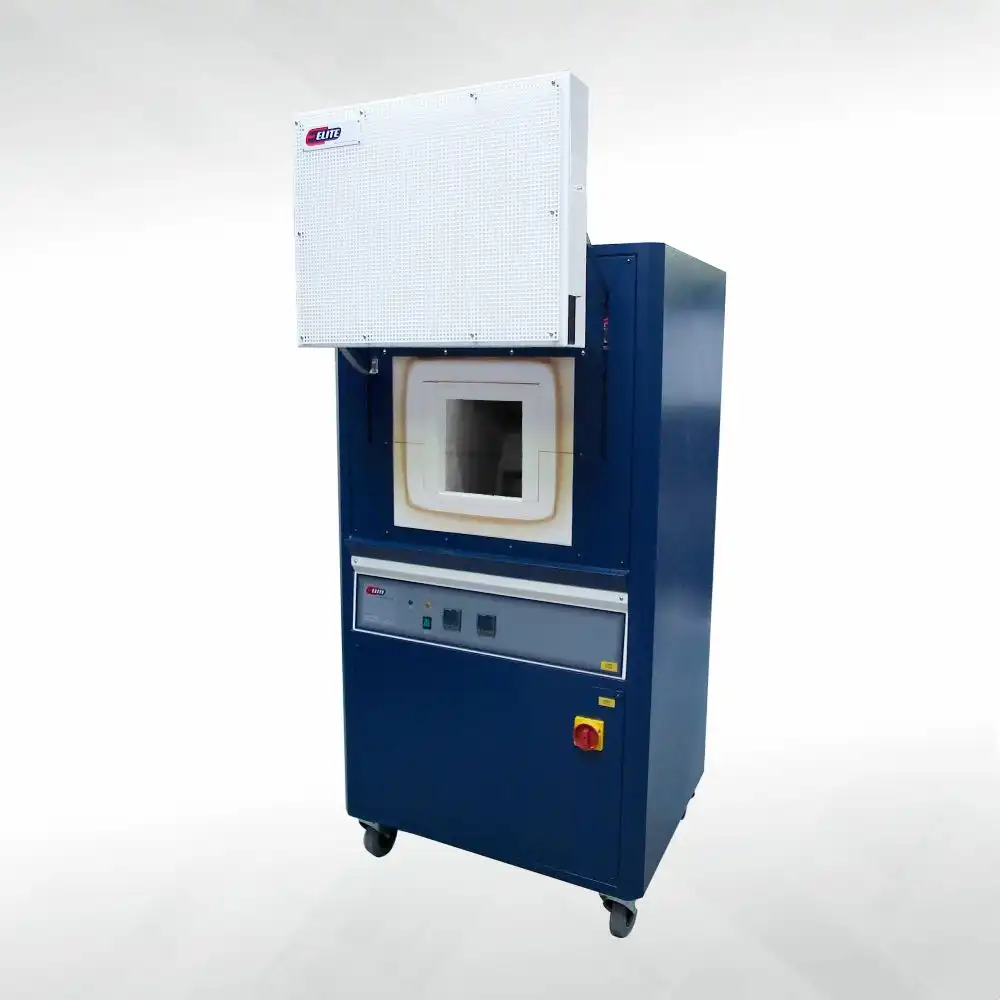
Elite builds chamber furnaces for laboratories, research groups and production floors across the UK and Ireland - from benchtop units for sample preparation to floor-standing chambers running production batches to 1800°C. Every model is designed and manufactured in Market Harborough, and most of what leaves the workshop is built to a customer's specification rather than picked from a catalogue.
A chamber furnace is specified by the process it has to run, not by its box size. These are the processes our customers bring us most often, and what each one demands of the furnace.
Sintering consolidates a powder compact below its melting point, so the finished density depends on holding the soak evenly across the whole chamber rather than on peak temperature alone. Technical ceramics typically sinter between 1400°C and 1700°C. A chamber with a cold corner produces a warped or under-dense part, which is why uniformity is worth specifying before maximum temperature.
Annealing relieves internal stress and restores ductility after forming, machining or welding. The work is held at temperature long enough for recovery and recrystallisation, then cooled at a controlled rate - usually the longest part of the cycle. Glass annealing runs a few hundred degrees; steels and nickel alloys sit far higher. Ramp control matters as much as the set point.
Heat treatment covers hardening, tempering, normalising and solution treatment - processes that change a material's mechanical properties by controlling how it is heated, held and cooled. Each specifies its own ramp, soak and cooling rate. A chamber furnace suits batch work, where parts are loaded, run to a recipe and unloaded, rather than continuous throughput.
Calcination drives off volatiles - carbonates, hydrates, organics - by heating a material in air below its melting point, leaving an oxide behind. It is routine in ceramics preparation, catalyst production and mineral processing. Because the process releases gas, extraction and chamber venting matter as much as the temperature profile.
Ashing burns off organic material so the inorganic residue can be weighed, typically between 550°C and 900°C depending on the standard being followed. Elite builds dedicated units for this work.
→ Ashing furnacesCupellation separates precious metals from base metals in a bone-ash or magnesia cupel, the final stage of a fire assay. It needs a controlled oxidising atmosphere and reliable air flow across the cupel.
→ Cupellation furnacesTell us the part, the process and the temperature you need to reach. We will tell you what the job requires and whether we can build it.
Most chamber furnace enquiries we quote begin with something a catalogue model cannot do - an unusual chamber footprint, a loading arrangement that suits the part rather than the furnace, a required atmosphere, or a temperature above the standard range. Elite has been designing and building to specification since 1998, backed by forty years of collective engineering experience.
Send us the part and the process. If it can be built, we will quote it.
→ Custom chamber furnacesChamber furnaces are high-temperature, box-shaped heating systems used in laboratories and industries for processes such as ashing, calcination, annealing, and heat treatment. They ensure precise temperature control and uniform heating.
The terms are often used interchangeably, but chamber furnaces typically provide larger heating volumes, multiple loading options, and higher customization compared to compact muffle models. Elite Thermal chamber furnaces are designed for both laboratory and industrial-scale operations.
For laboratory heat treatment and ashing up to 1200°C, see our muffle furnace range.
Chamber furnaces operate from 80°C up to 1800°C, depending on the model and heating element material. Lower ranges support drying and ageing, while higher ranges enable advanced processes in ceramics, glass, and metallurgy.
Front-loading furnaces are versatile for general use, top-loading suits tall crucibles and vertical samples, and bottom-loading supports heavy or delicate workpieces. Elite Thermal offers all three configurations with customization options.
Elite Thermal furnaces achieve tight temperature uniformity through premium insulation, multi-zone heating where required, and precision thermocouple control via PID or PLC systems. This ensures consistent heating for reliable laboratory and industrial results.
Elite Thermal chamber furnaces use high-grade resistance wires (up to ~1300°C), silicon carbide (SiC) up to ~1550°C, and molybdenum disilicide (MoSi₂ / MoWSi₂) up to 1800°C, depending on application requirements and operating atmosphere.
Yes. Elite Thermal furnaces can be configured for air, inert gases such as nitrogen and argon, low-oxygen, or vacuum conditions, making them suitable for specialized laboratory and industrial heating processes.
All Elite Thermal chamber furnaces include door interlocks, optional over-temperature protection, emergency stop systems, and alarms. They comply with ISO 9001 quality standards for maximum safety and reliability.
Chamber furnaces require the correct electrical supply, proper ventilation or exhaust, and adequate clearance for safe operation. Elite Thermal can provide full delivery, installation, commissioning, and training support on request.
Elite has supplied furnaces to UK universities, national laboratories and aerospace manufacturers since 1998. ISO 9001:2015 certified, designed and built in Market Harborough, Leicestershire.